
We are open today from 6pm - 8am. Call us on 0207 631 0101 to talk about anything. Outside of these hours, you can contact Samaritans 24/7 on 116123.
We are available from 6pm-8am for support by phone, instant message and email
July 8, 2026
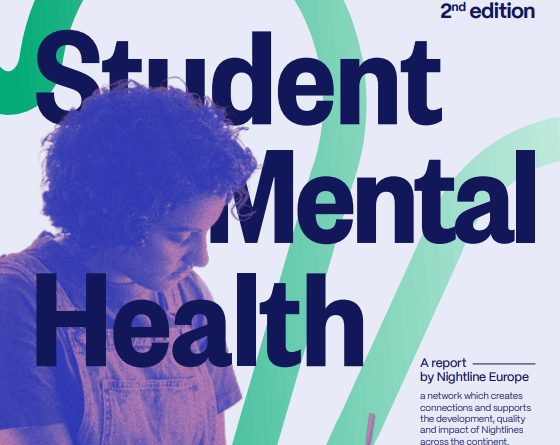
Nightline Europe’s new 2026 report is more than a snapshot of student mental health. It is a call to redesign how institutions think about care, prevention, and belonging. As the report puts it: “student mental health is deteriorating across Europe”, with academic pressure, financial insecurity, loneliness, discrimination and global uncertainty shaping a generation’s wellbeing.
Drawing on nearly 23,200 calls and chats handled in 2025 by more than 1,400 trained Nightline student volunteers, the report offers rare evidence and insight from students themselves. Its core message is simple: support must be accessible, trusted and built with students, not just for them.
The report argues that “mental health is more than ever a collective responsibility.” For Higher Education institutions, this means moving beyond crisis response and embedding wellbeing into teaching, assessment, accommodation, student services, safeguarding, inclusion, financial support and campus culture.
A whole-university approach recognises that student wellbeing is shaped by structural conditions as much as individual resilience. Universities and partners should invest in prevention, strengthen referral pathways, reduce waiting times, improve data and support peer-led services with training, supervision and sustainable funding.
“Nothing about us without us”
One of the most powerful ideas in the report is that students are not only recipients of support: they are key actors in designing and delivering it. Peer-led initiatives such as Nightlines show how students can build trusted spaces for listening, connection and early support.
As the report concludes, “student mental health must be recognised as a political and structural issue” linked to social justice, access to education, housing insecurity, discrimination and the future of public higher education. The challenge now is to match student commitment with institutional and structural commitment.
To read the full report, click here.


